Bringing live music home
Taking a ticketed concert livestreaming platform from 0→1 in the pandemic shutdown: first an illustrated theater you could visit, then a stage that let the artists lead.
A concert is an event, not a video.
How do you make it feel like one on a screen?
In 2020 the pandemic shut down live music overnight. Dreamstage was founded that spring to bring it back online: ticketed concerts, streamed live and never prerecorded, to fans watching at home on their phones, computers, and TVs. Its founders were Thomas Hesse, a former president at Sony Music; Jan Vogler, the cellist and director of the Dresden Music Festival; and Scott Chasin, the tech entrepreneur who founded ProtectWise.
I joined as the founding design lead while the company was in stealth, and went full-time as Director of Design after the April 2021 fundraise. I took Dreamstage from zero to one, from the MVP and brand through go-to-market and launch, then helped scale it in market: a redesign built for a growing calendar of shows across every genre, and a design team of four that handled everything from the app to the artwork for every show.
A theater you could visit
Watching a concert in a browser tab is lonely. We wanted a ticket to Dreamstage to feel like a night out: somewhere you went, with other people, for something that only happened once.
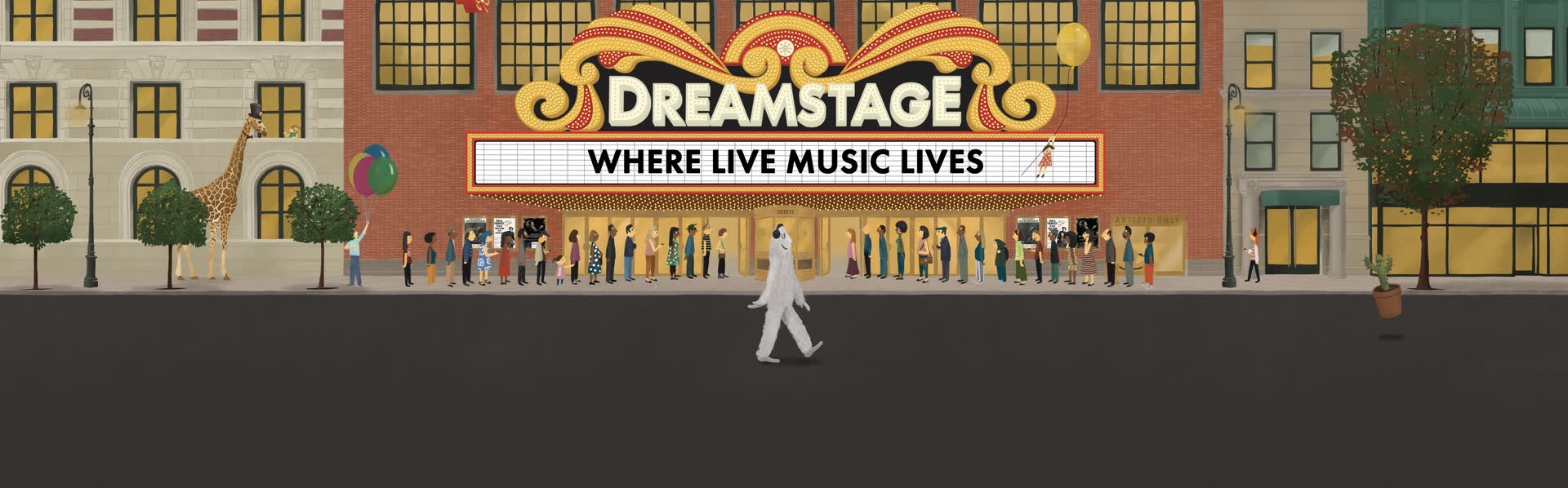
So we commissioned the illustrator Max Dalton, known for his work with Wes Anderson among others, to draw Dreamstage as a real building: a street with a marquee announcing the next show, a lobby with a box office and an audience entrance, an artists’ entrance and a green room backstage, and concert halls themed for different kinds of music.
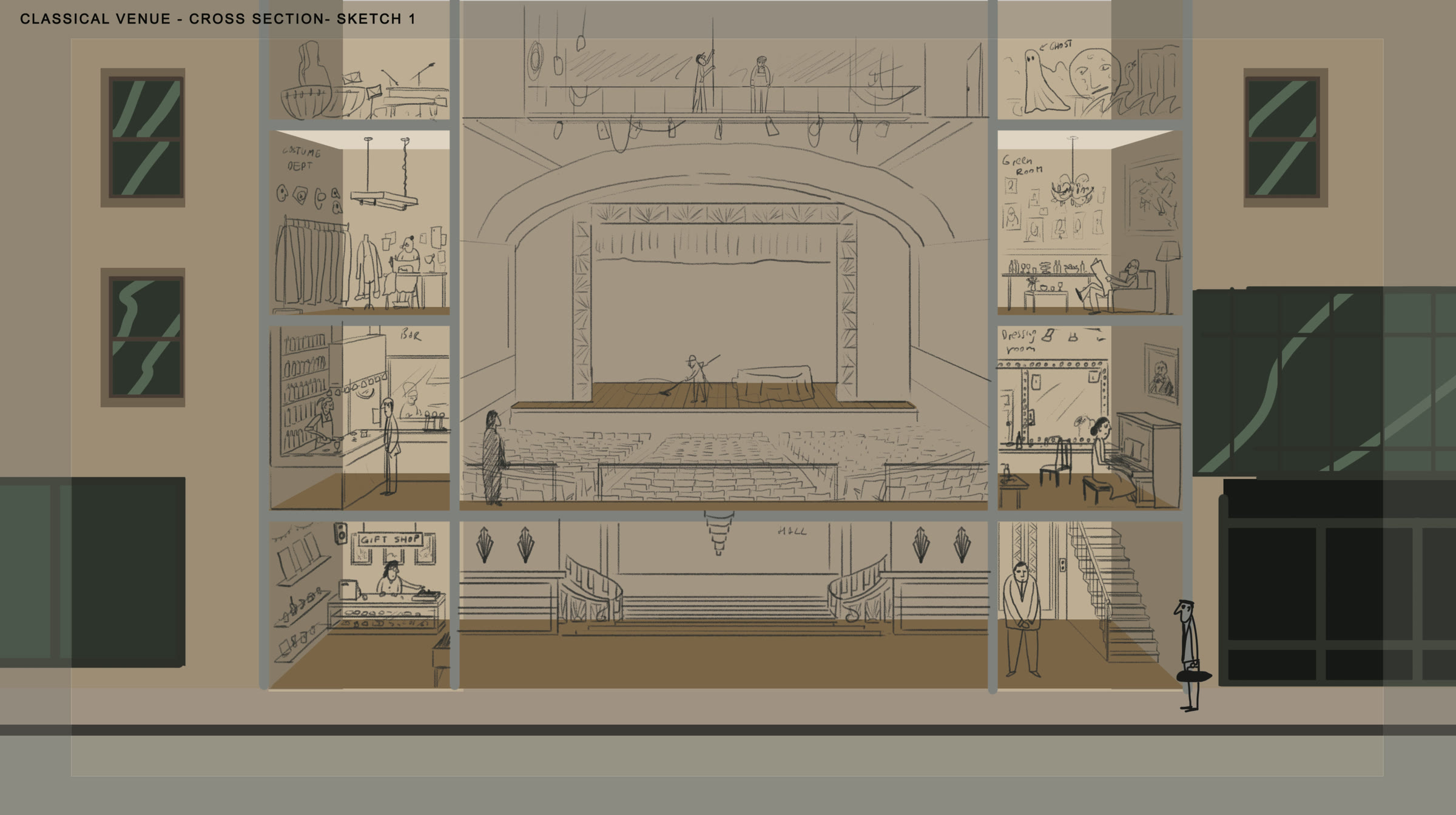
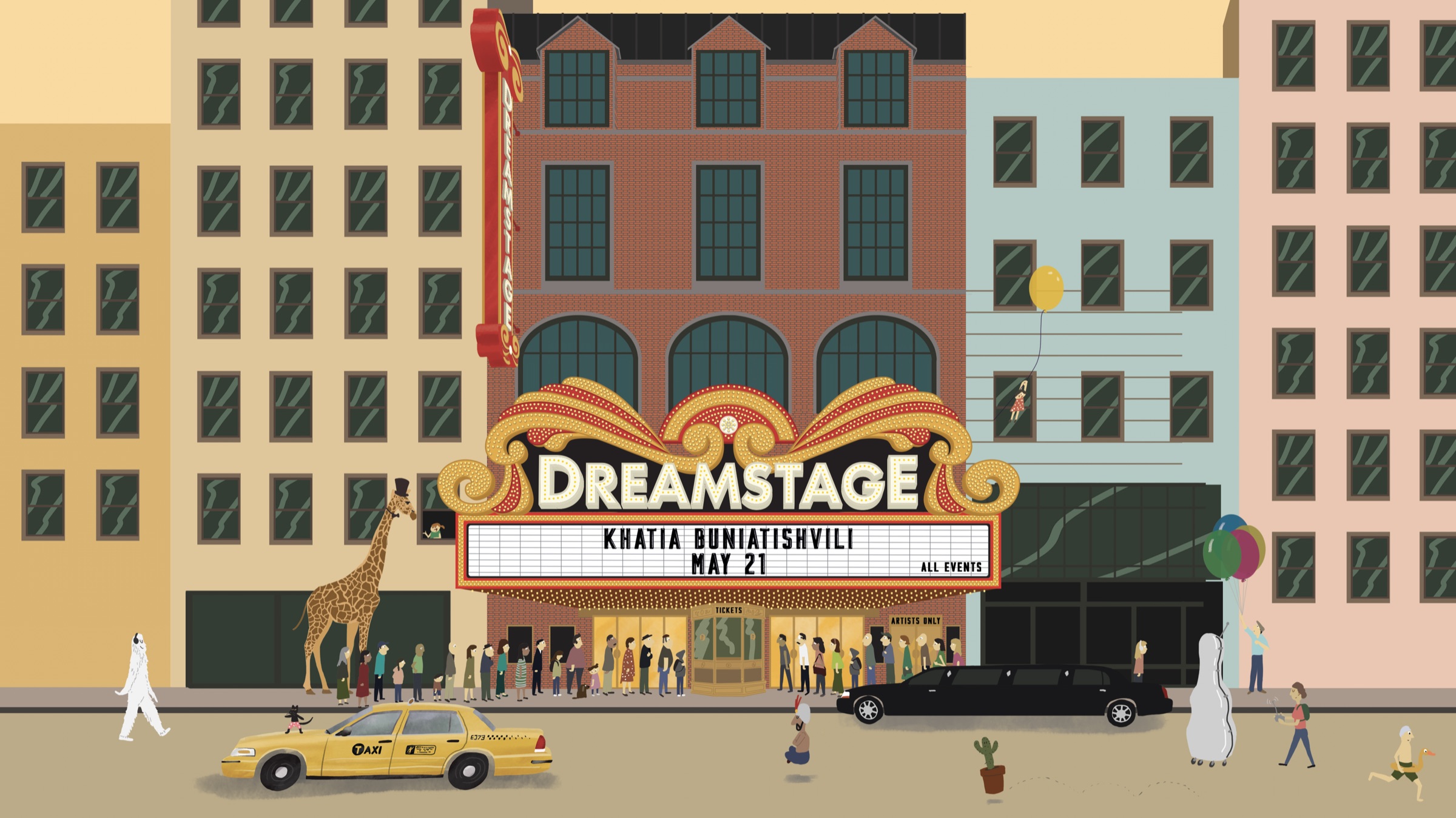
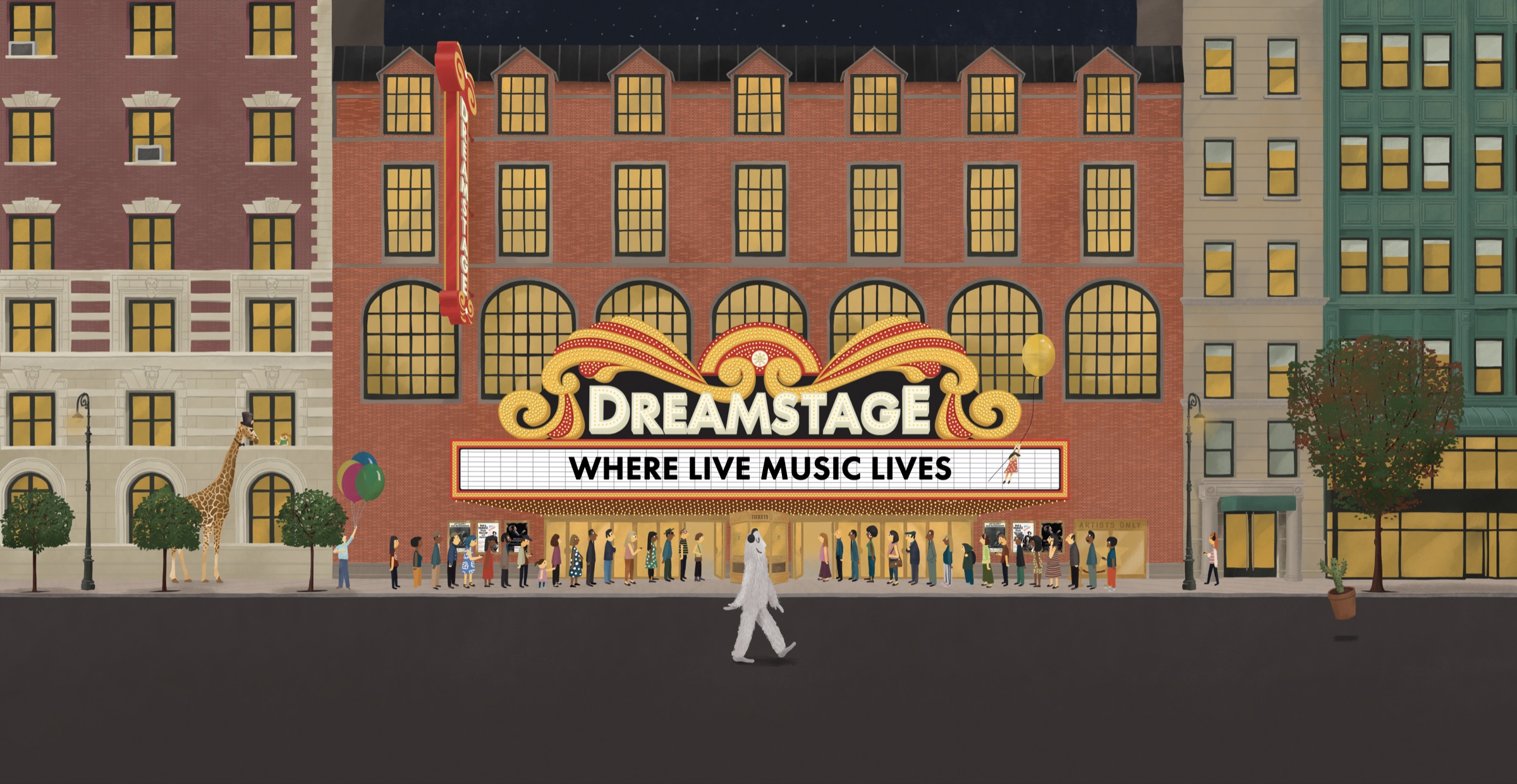
That was the fun part for Max. For me it raised a harder question: how do you put an interface on an illustration? Every real control, from the ticket button to the chat and the countdown, had to live inside the drawing without breaking it, and work at every screen size, not just in one painted frame. The whole thing could also tip into kitsch. We decided not to fight that. A giraffe in a top hat waits outside the theater and a yeti strolls past; we owned the kitsch as the brand, and the interface’s job was to be quietly convincing inside it.
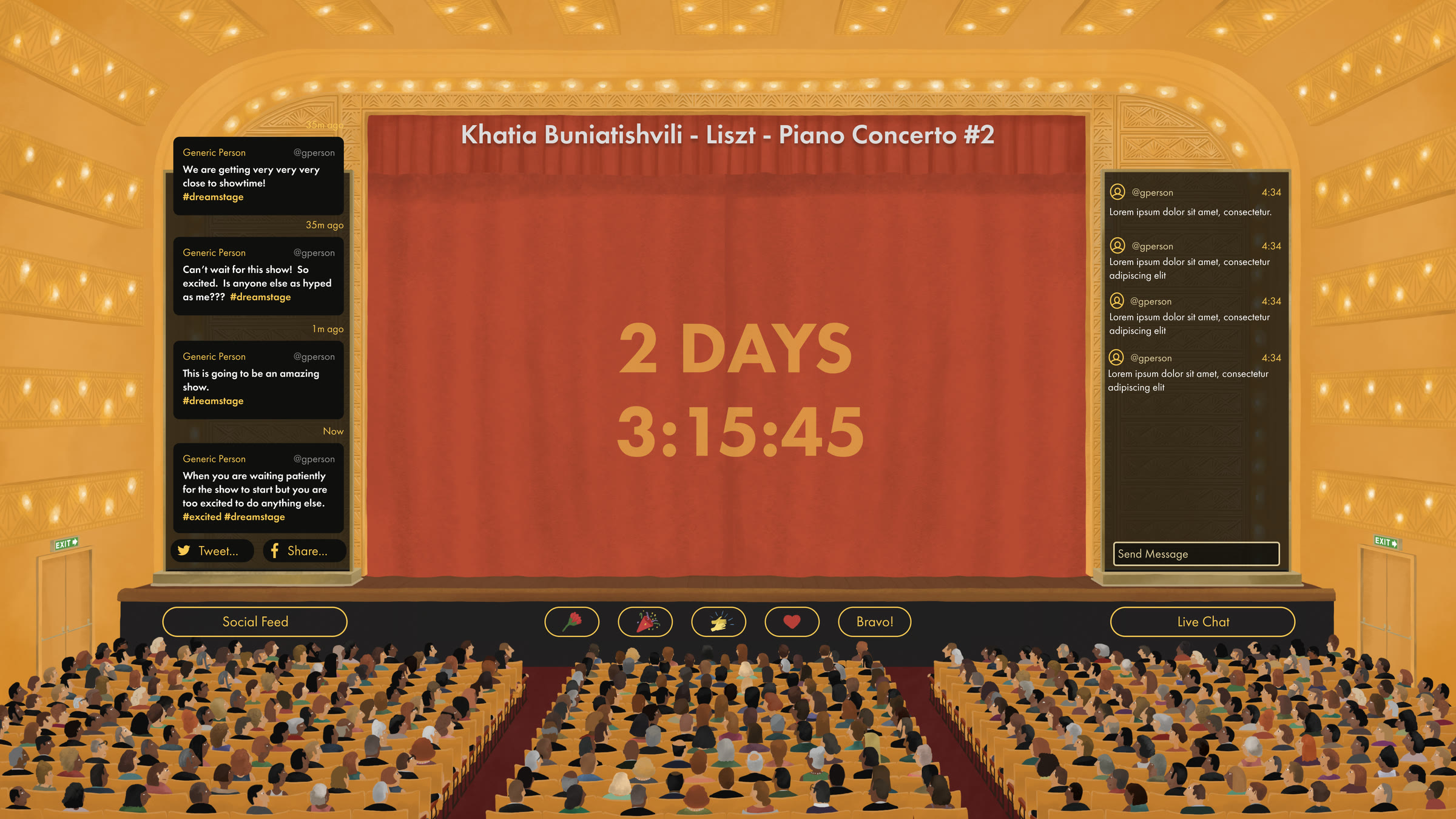
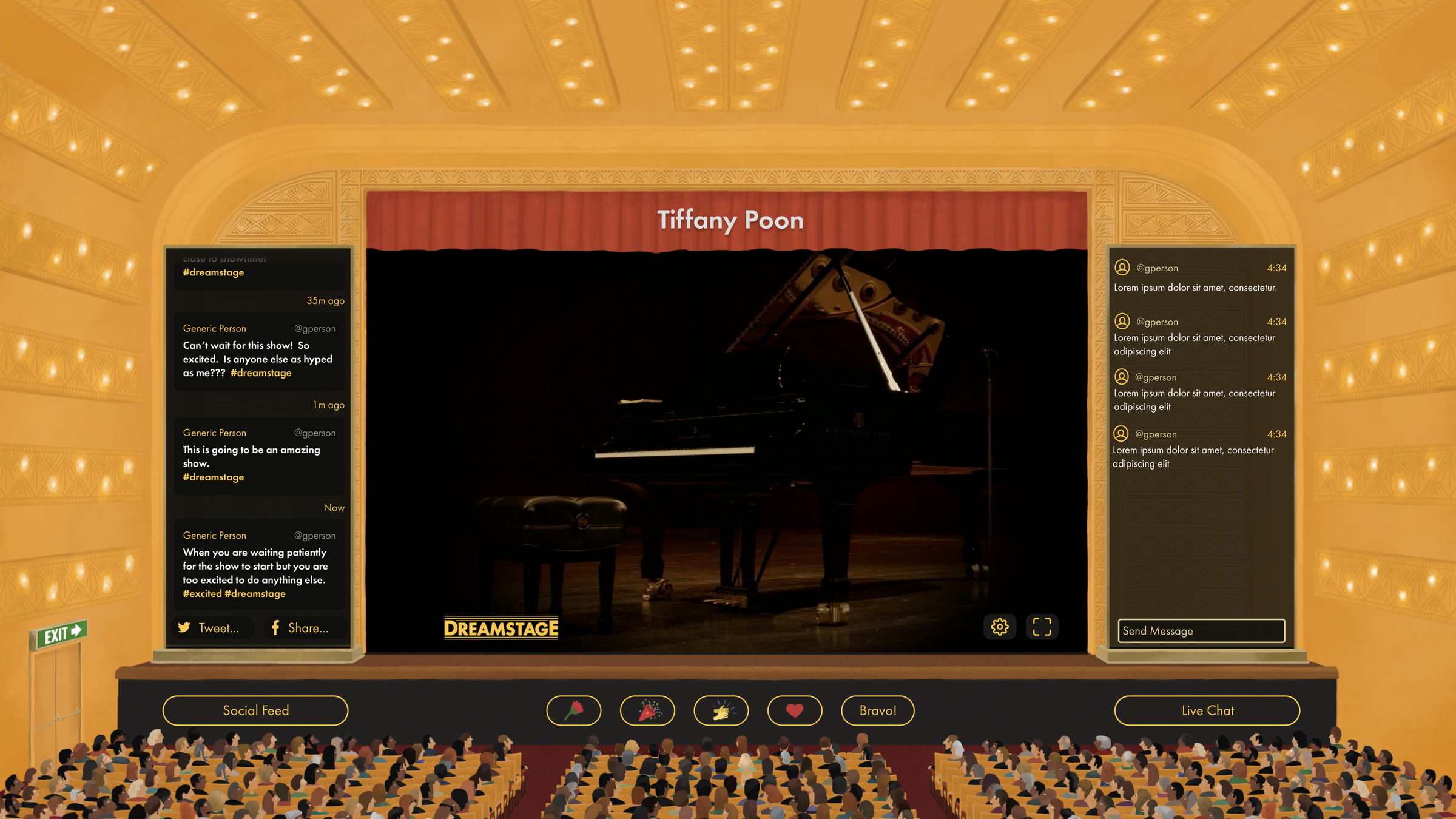
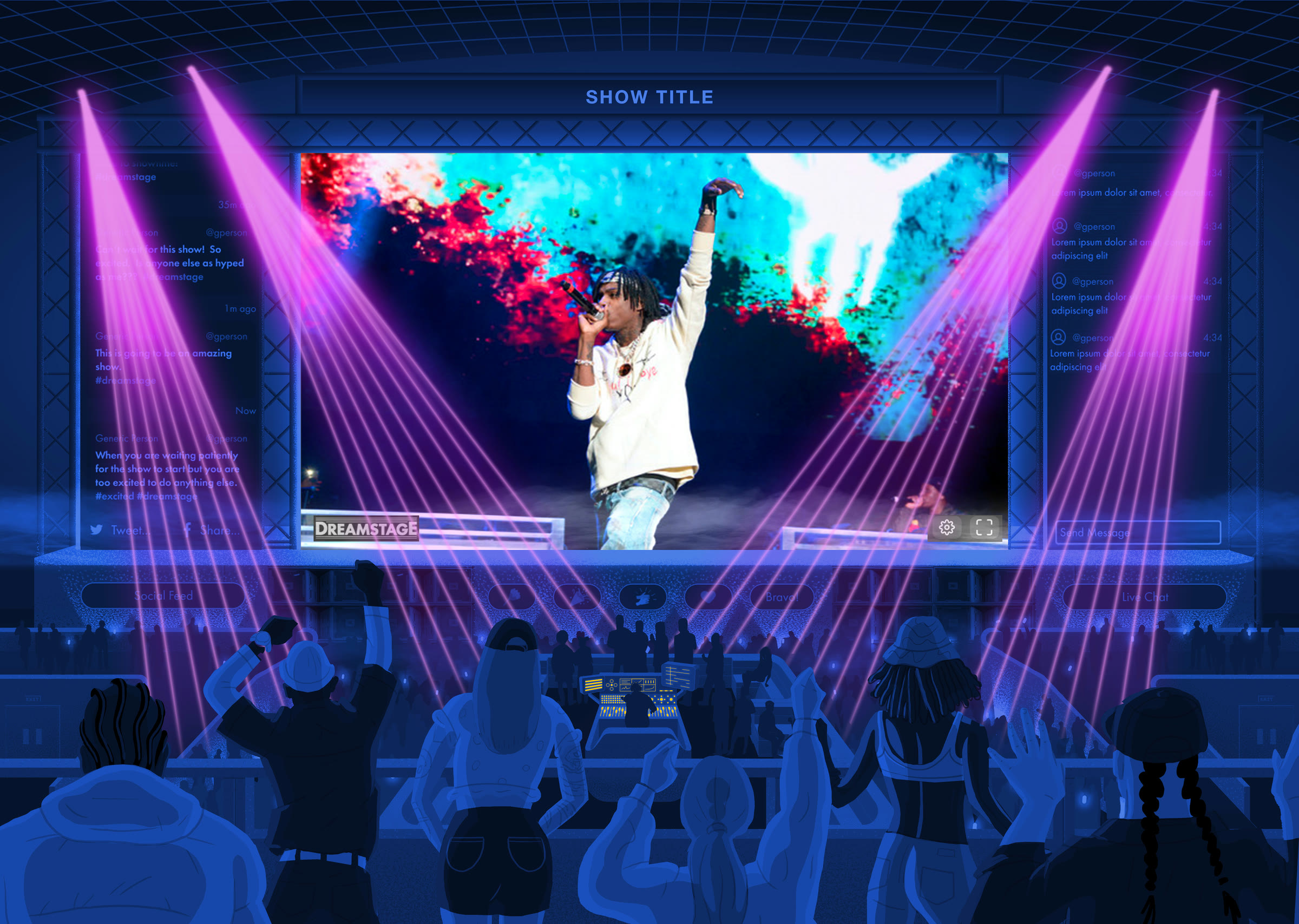
In the hall, the interface became part of the room. Before the show, a countdown played on the curtain. The social feed and live chat hung beside the stage like the theater’s own screens, and reactions, from roses to a “Bravo!”, ran along the front of it. When the show began, the curtain opened on the stream.
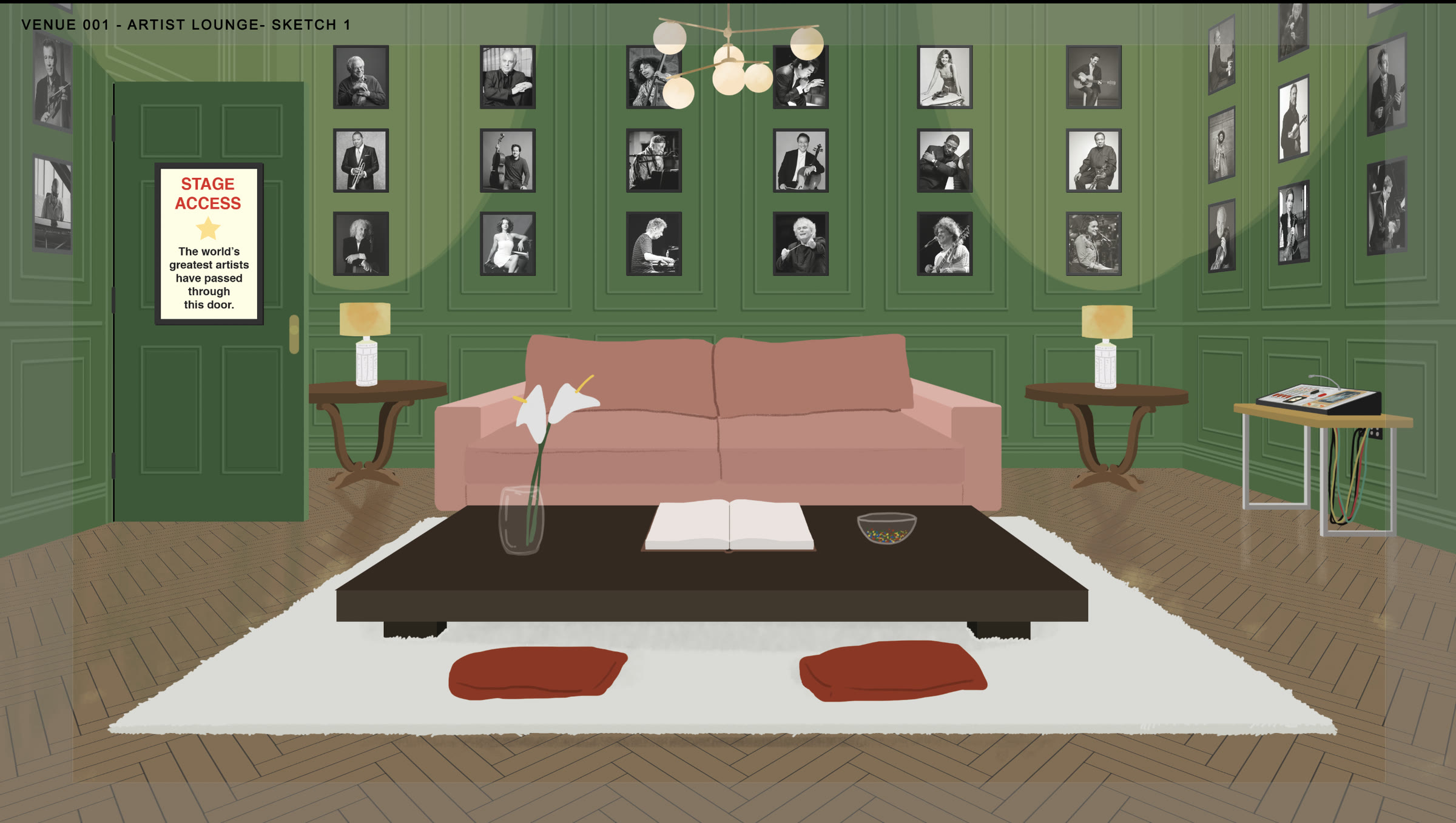
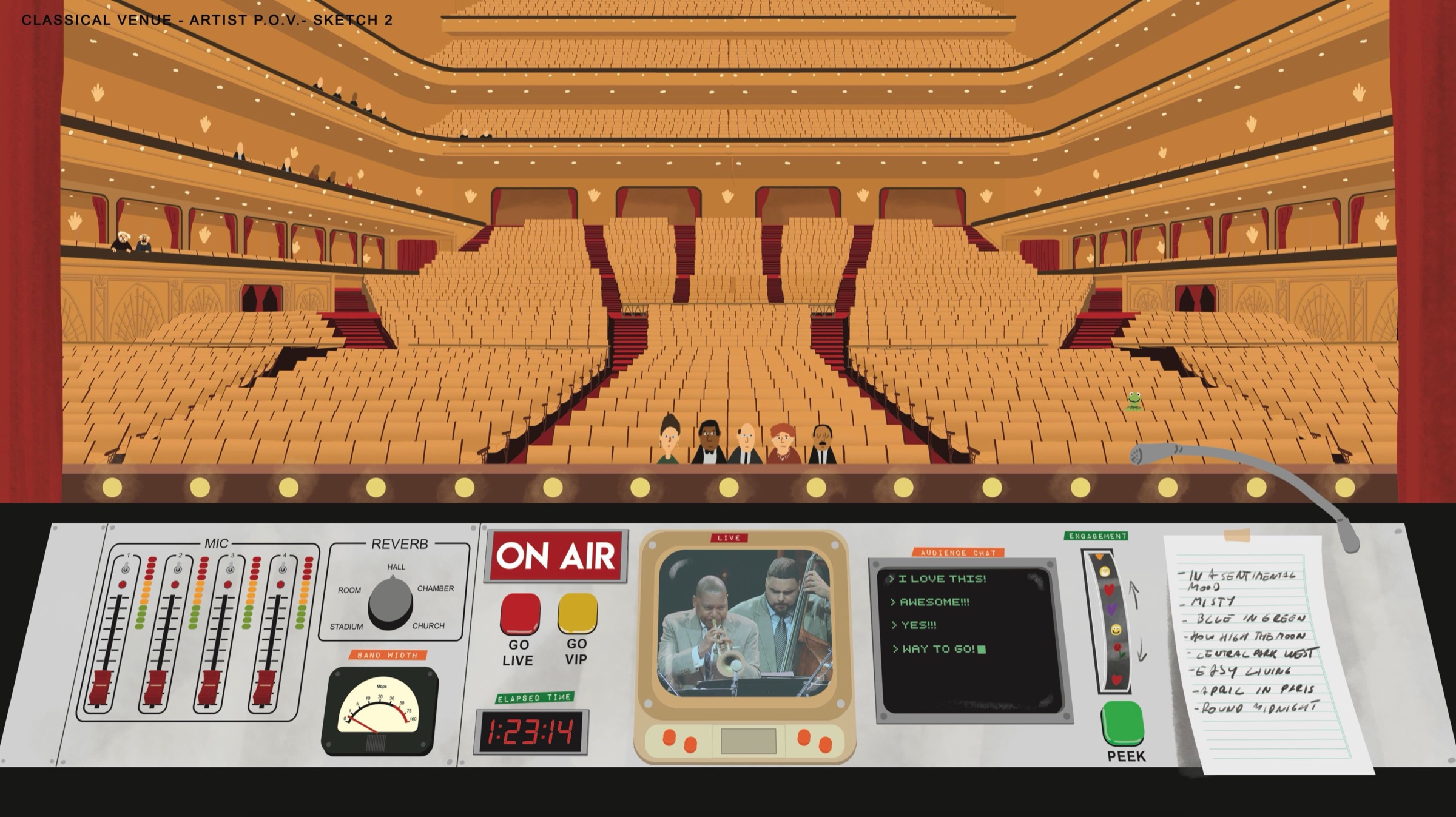
We took the idea as far as it would go. Max’s sketches went backstage too: an artists’ lounge, and the view from the stage, with an on-air console for the performer to go live, read the audience chat, and see how the room was reacting.
Opening night
We built the first version in stealth with a small development team, and all of it was new: streaming built to hold tens of thousands of simultaneous viewers, a browse experience for upcoming shows, event pages, ticketing, shopping, and checkout, and apps for the web, phones, and Apple TV, which we expected to be the main way people watched.
The launch was set for July 30, 2020. Thomas would announce Dreamstage in a live TV interview, and the site would go live as he did. We were all at home in the shutdown, so the final push was an all-night Google Hangout, coding and testing into the early morning. When the interview aired, we flipped the switch, and the site worked. Three weeks later we streamed our first ticketed show: Jan Vogler and the pianist Hélène Grimaud, from the Fisher Center at Bard College.
When the stage got crowded
The illustrated theater was made for the music we started with. Jan brought in many of our early shows from the classical world, Yo-Yo Ma the biggest of them, and a gilded concert hall suited a cello recital perfectly.
Then the calendar filled with everything else: classical, country, hip hop, rock, metal, and everything in between. Our first answer was to double down. We built a second venue, a club, and this time I brought in a different illustrator, Mike Scarano, so the look of Dreamstage could start to widen. It opened in October 2020 for Chief Keef and Polo G, and the show was a success. We started on a third venue, for rock.
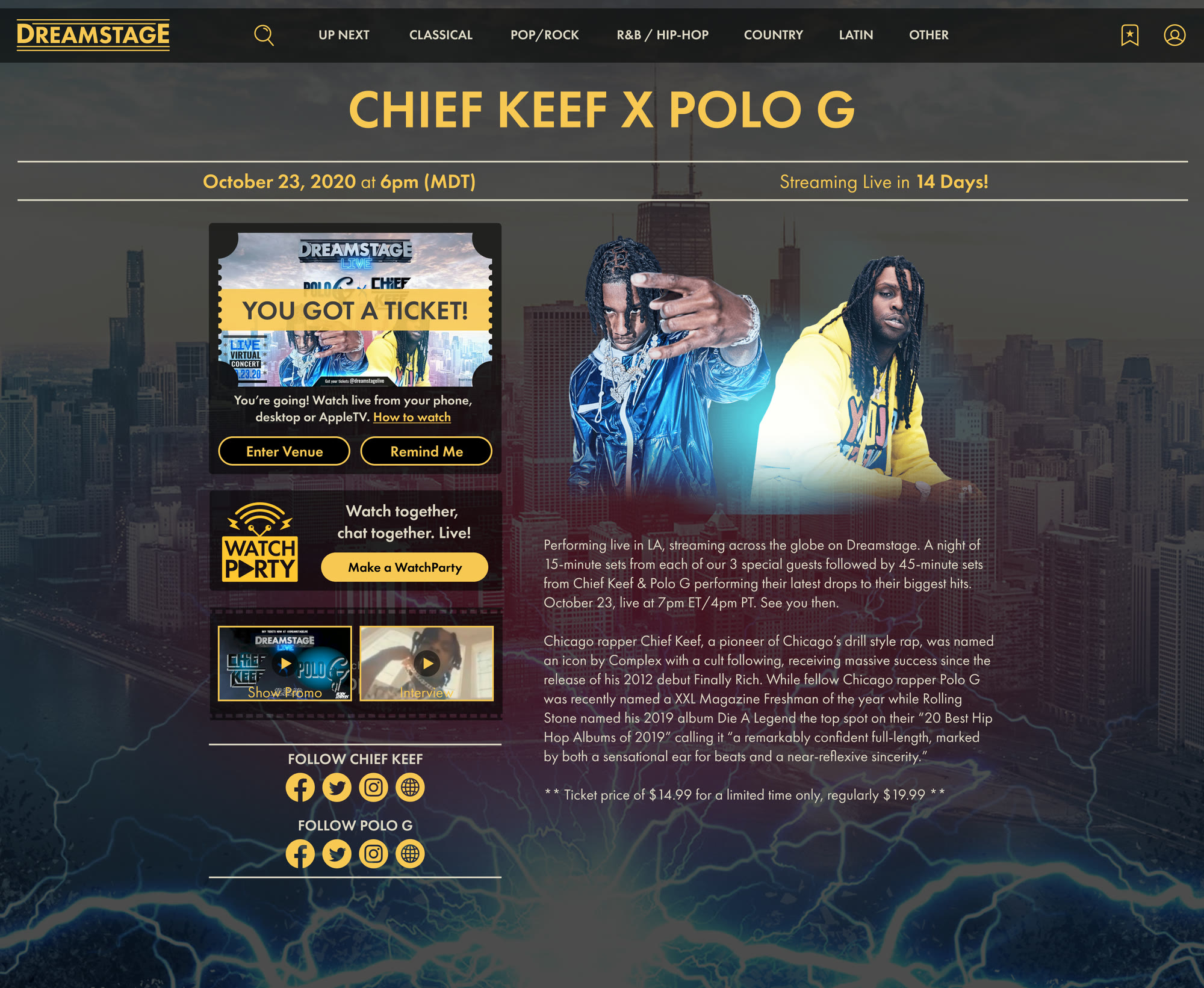
It couldn’t scale. We were adding shows faster than we could draw rooms for them, across more genres than any set of rooms could cover. And as bigger artists came to us, a harder problem appeared.
We had worked so hard to make Dreamstage a destination that its look now competed with the artists we were there to showcase.
Getting out of the way
A few months in, we redesigned the whole experience. This time I drove it end to end, because we were no longer fitting the product into the illustrations. The goal was to keep a little of the playfulness and the warmth of a night out, but make everything around the show cleaner and quieter, so the acts themselves took center stage.
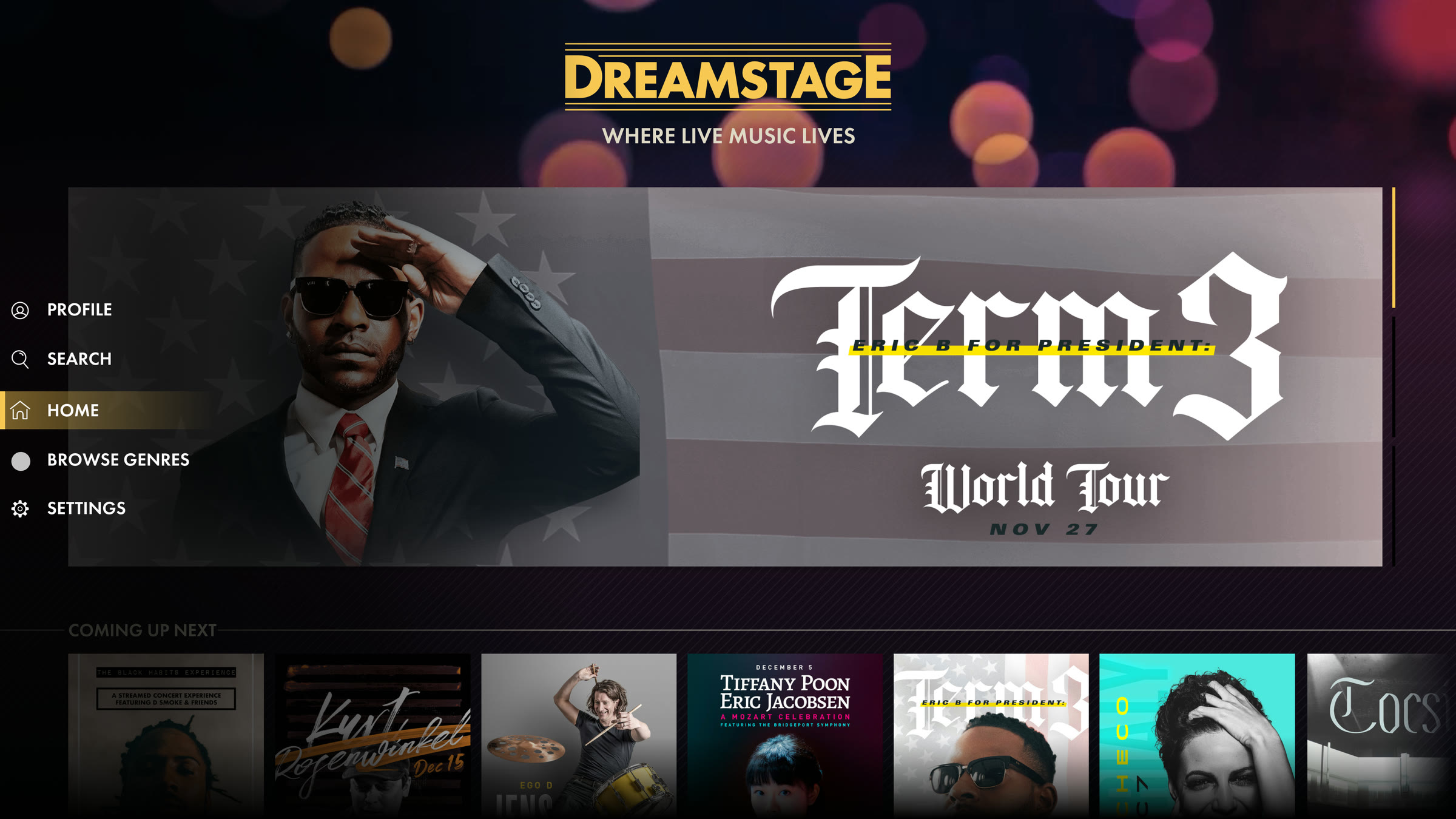
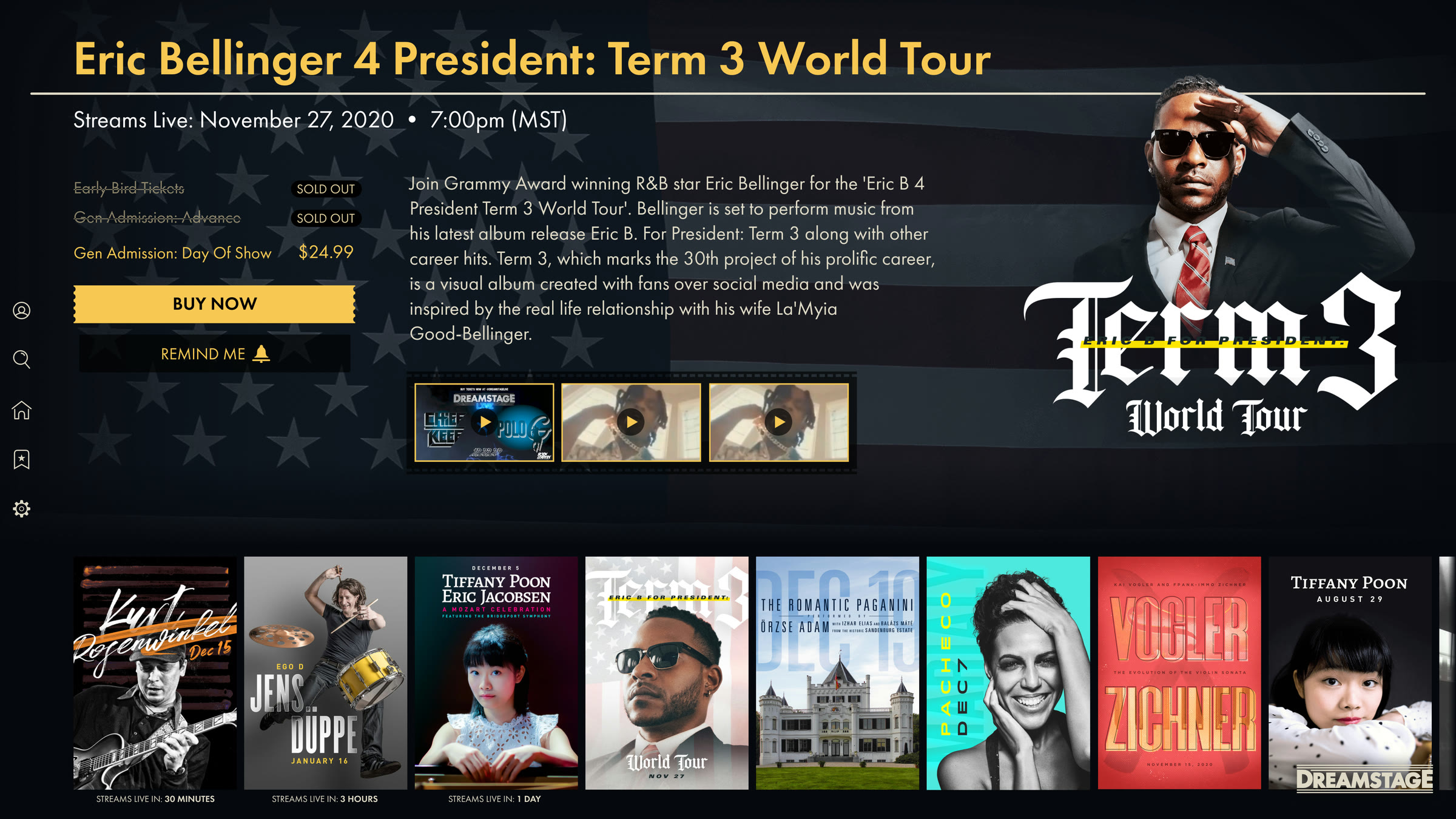
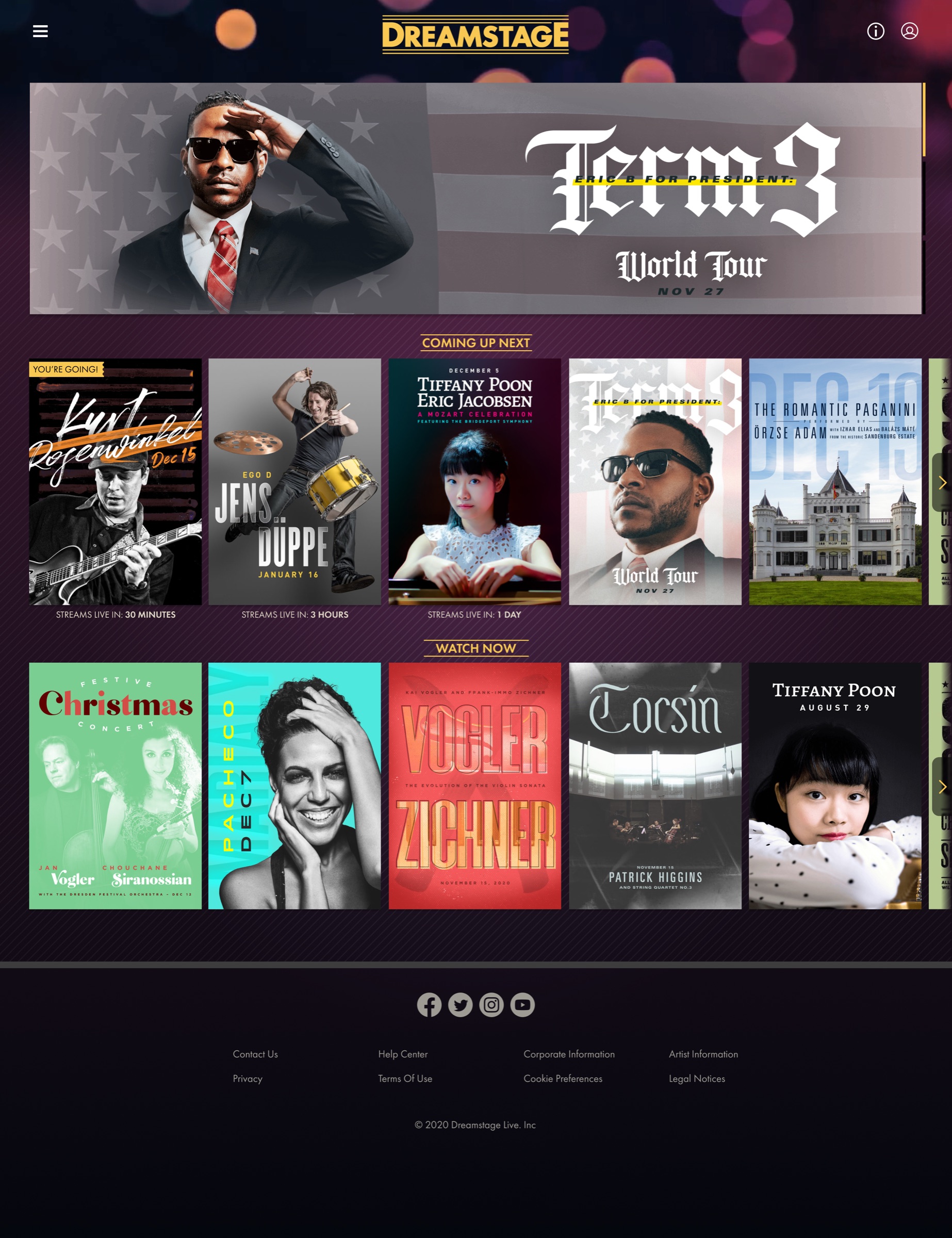
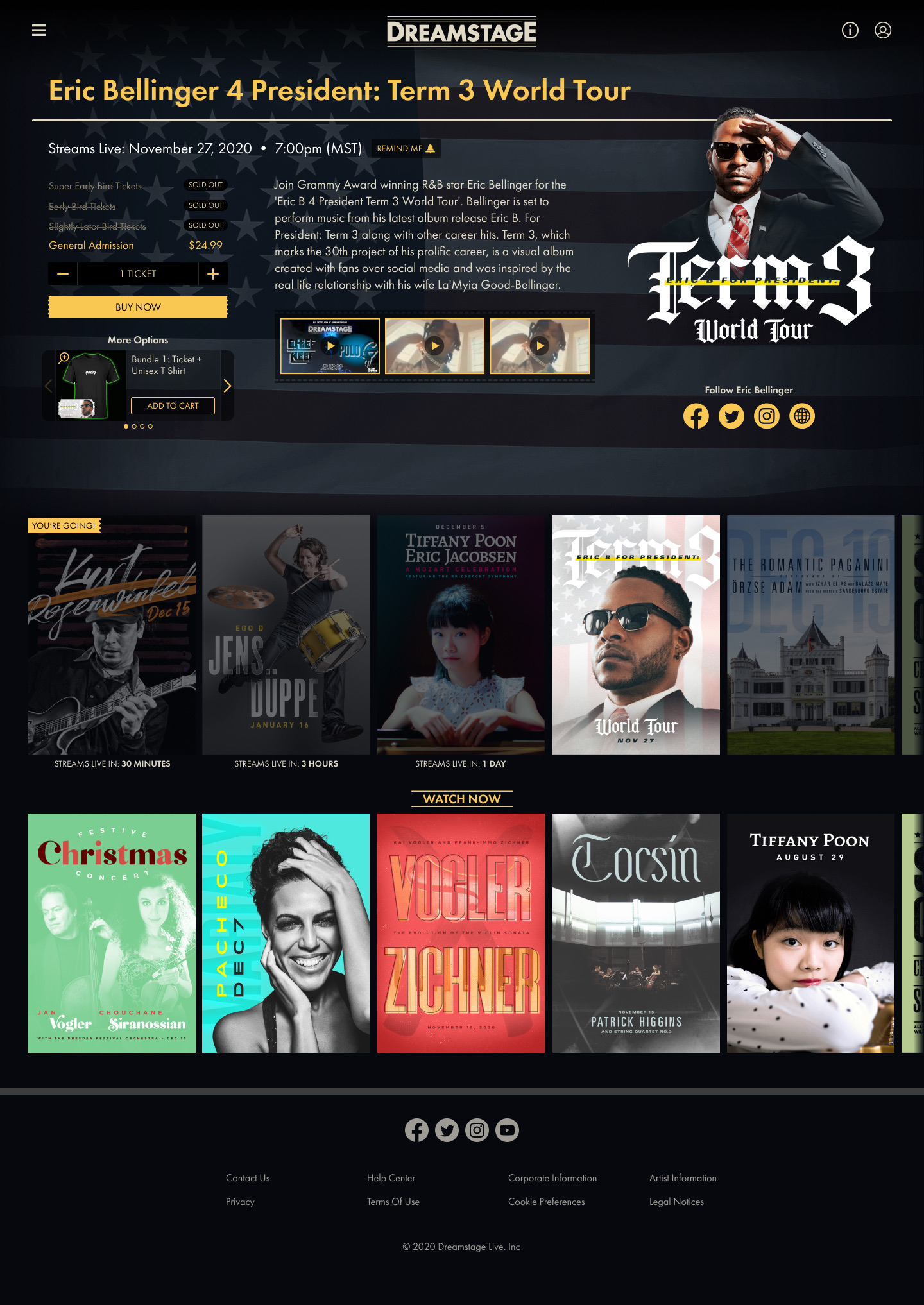
The first redesign went dark and let each show’s artwork lead: a featured show across the top, and rows of posters for what was coming up and what you could watch now. Each show page took on that show’s own look.
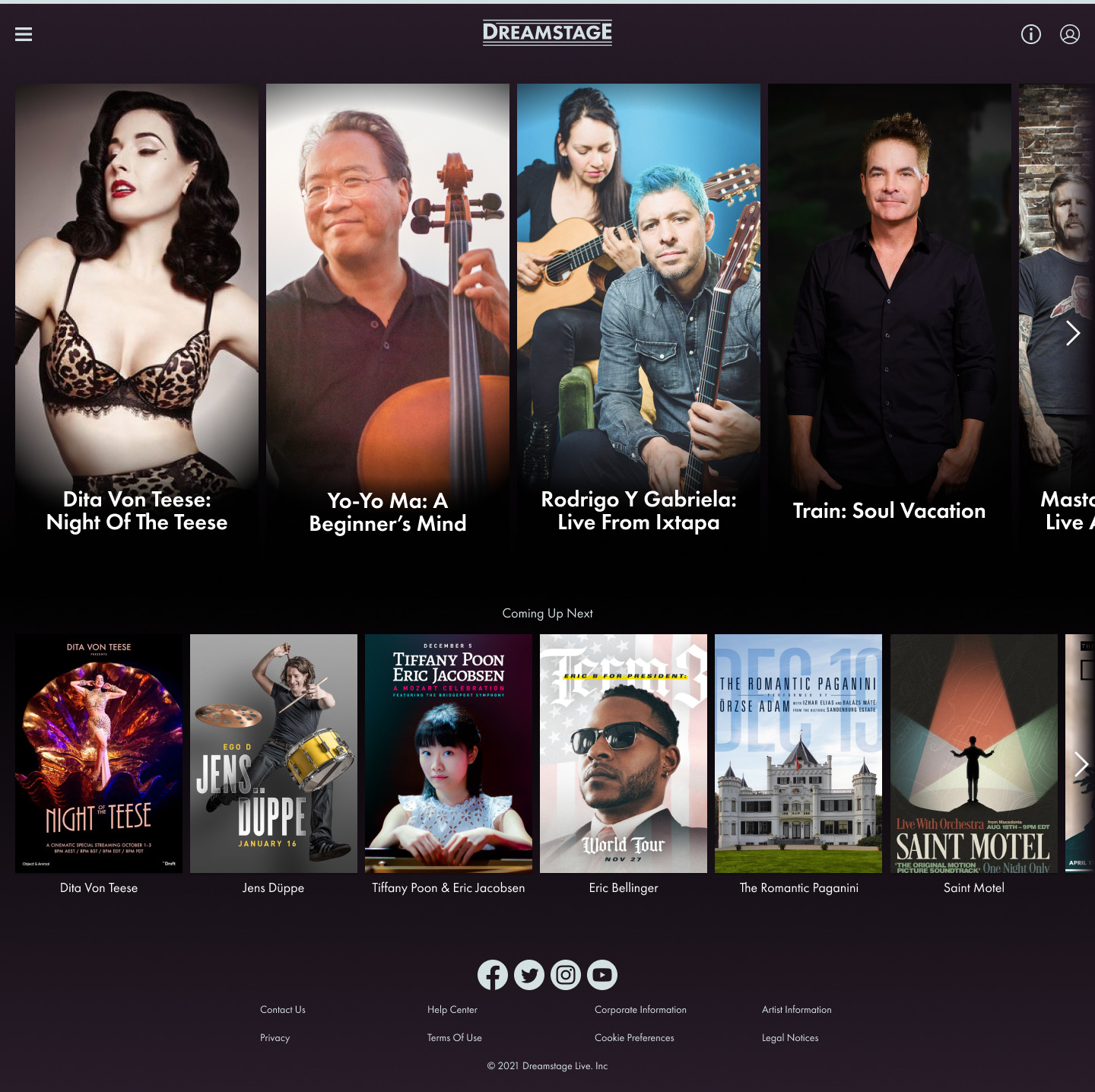
We kept refining. The final version stepped back further: the artists’ own photography, large, with the show’s name and little else, and the posters below. By then Dreamstage looked less like a place and more like a stage.



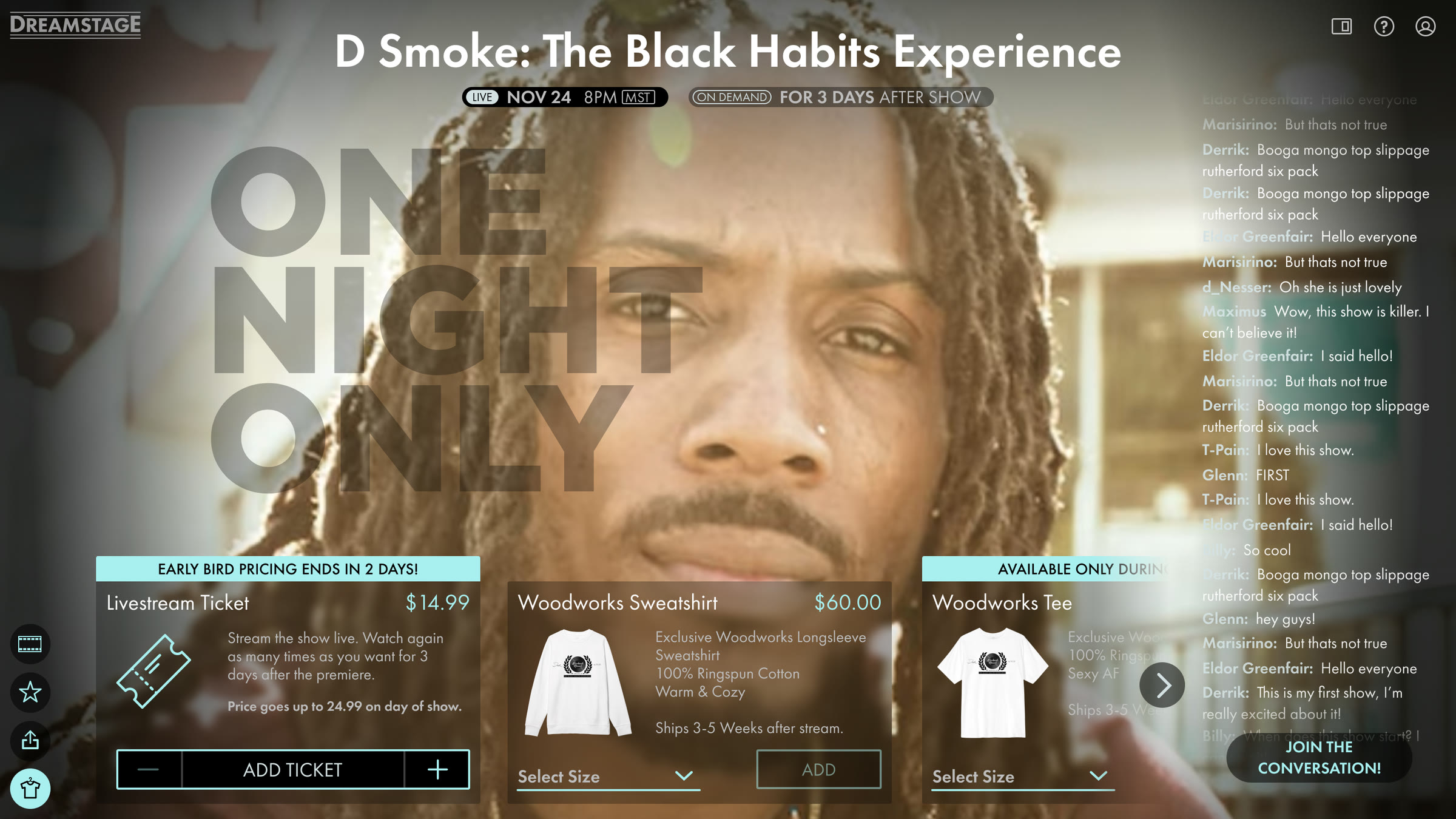
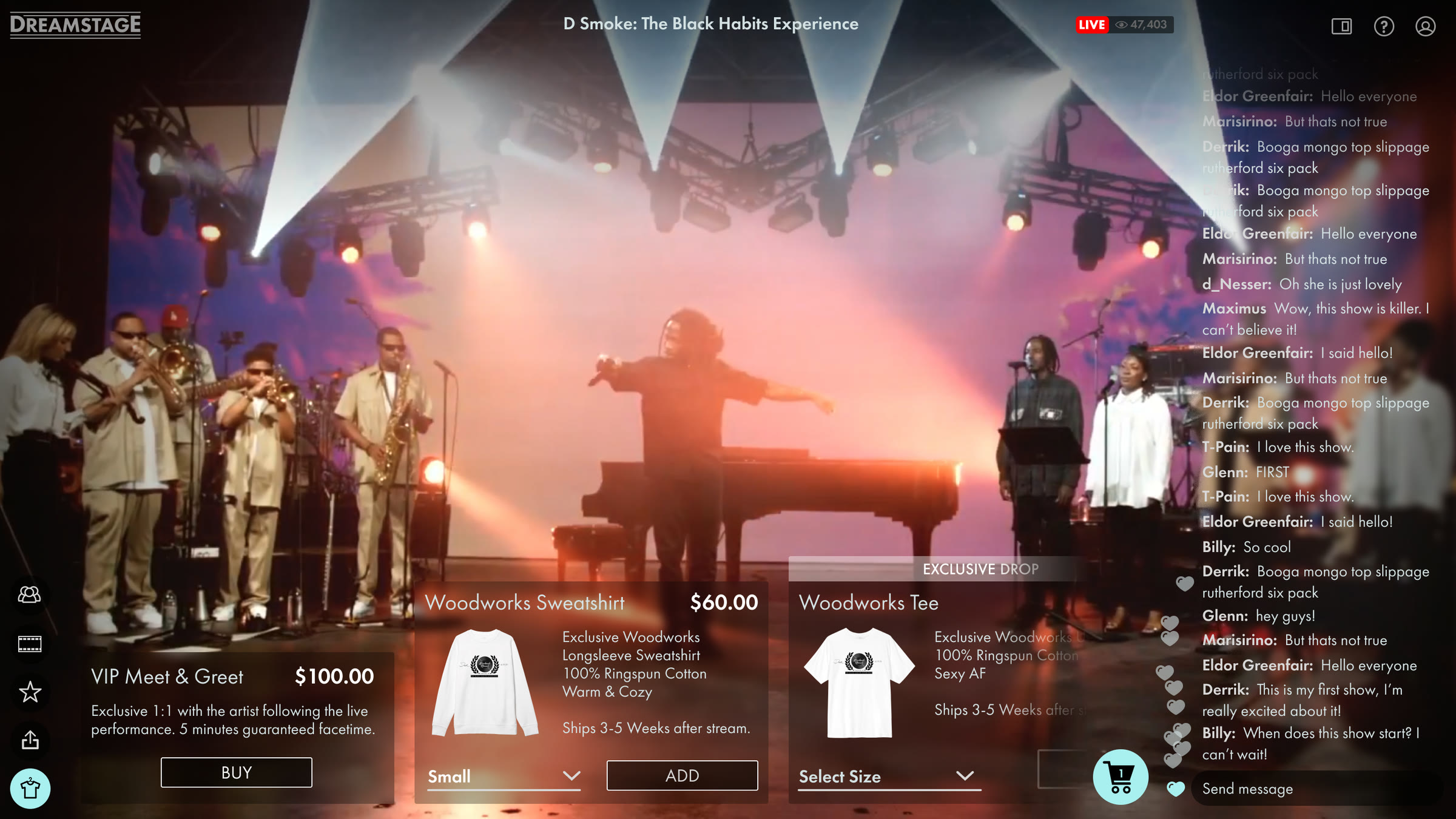
The last concept we worked on, Megastage, went further into the show itself: the stream filling the screen, a watch party with live reactions, and live shopping during the show, with merch drops and VIP meet-and-greets on sale while the band played. It didn’t launch, but it shows where the platform was headed: from a page you watched to an event you took part in.
A team of four
At first the design team was me. Every show also needed its own artwork, a concert poster and a show page wrapped in the artist’s visuals, and I made those too. As the calendar filled, I brought in freelancers, then hired one of them full-time to handle show artwork and the marketing work that came with growth. I hired a junior UX designer to help with the core app. With the redesign, it was finally time for a real design system, and I hired a designer to stand it up with me and take on UX projects. The four of us covered everything: the product, marketing, the pitches to win artists’ shows, and everything in between.
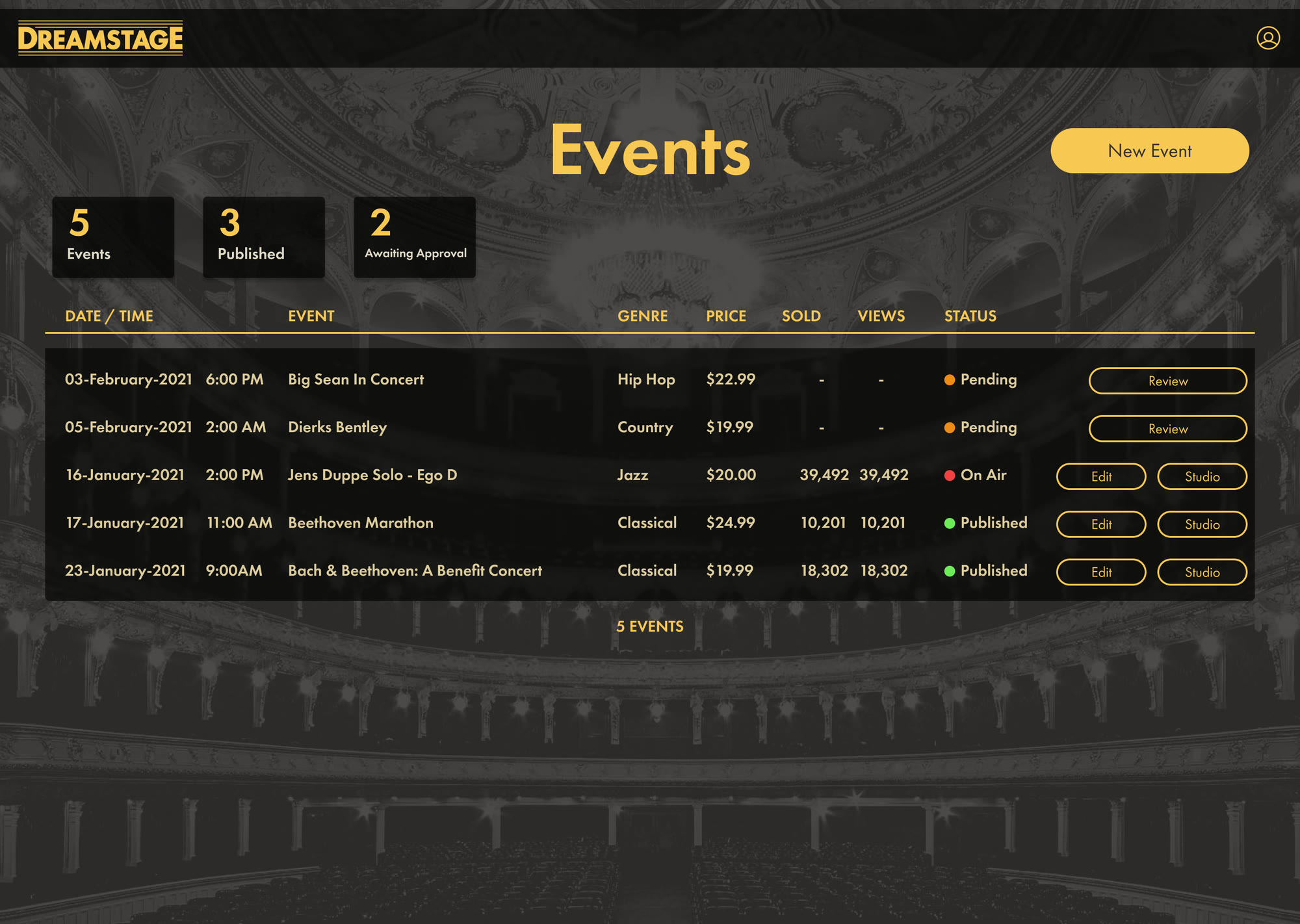
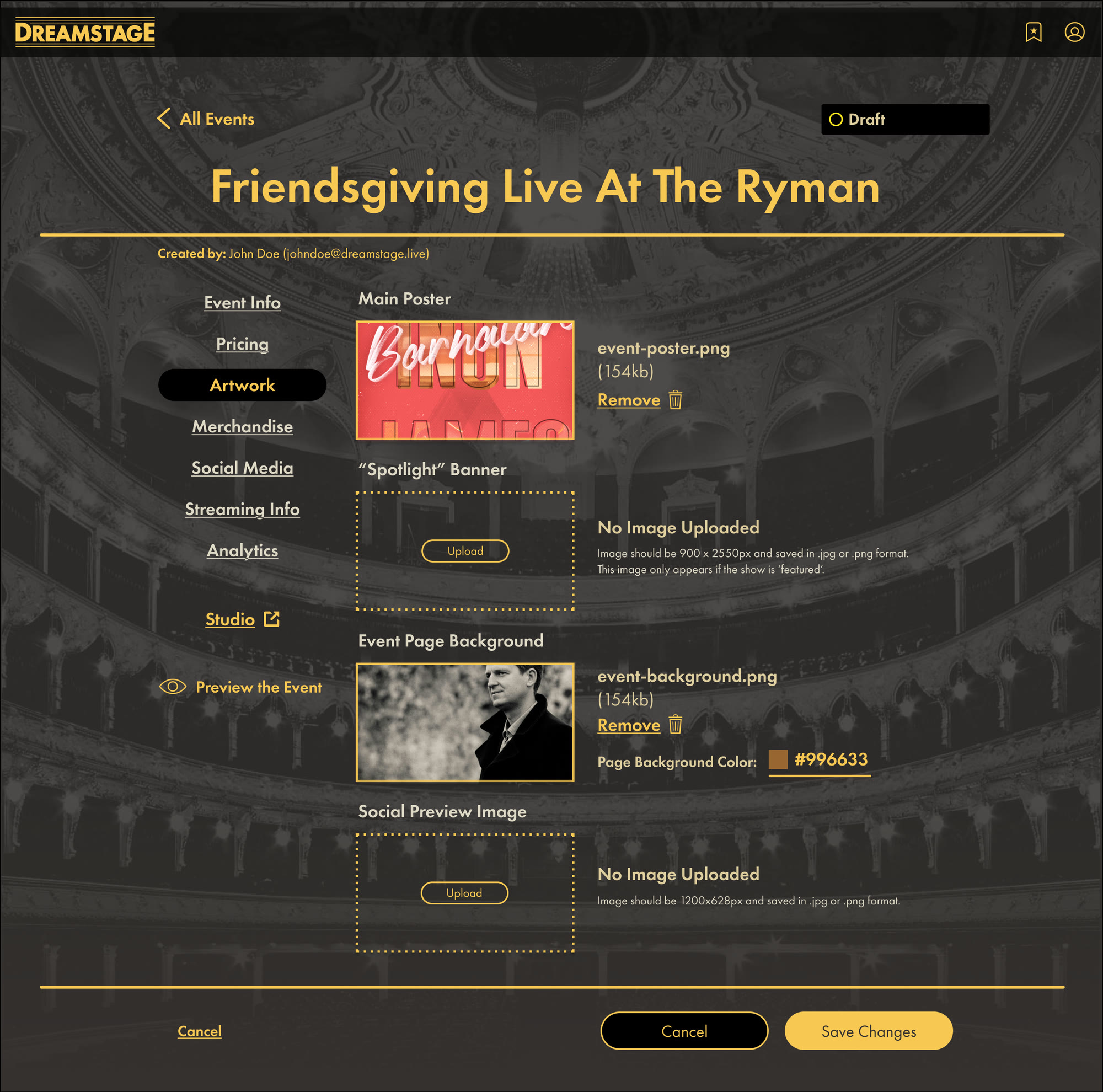
Once the shows outgrew one person running them, we built Conductor, our internal tool for running the stage. Each show went in as an event, with its date, artists, pricing, artwork, merchandise, and streaming details, then moved from approval to published to on air, with sales and views alongside.
Looking back
In May 2021 Deezer invested in Dreamstage, and we partnered with Driift, an event production company Deezer also backed, which produced some of the biggest livestreams of the time but had no platform of its own.
The trouble was where the money had gone. We had invested in an excellent platform; our competitors had invested in securing the rights to big-name shows, and in this market that won. We struggled to land the biggest artists and to market the shows we had. In December 2021 we ran low on money, and most of the design, product, and engineering team was laid off, me included. I stayed involved as an adviser for a while after, and in January 2022 the platform carried The Smile’s debut shows to more than fifty thousand people at once. In September 2022 Driift acquired Dreamstage, with more funding from Deezer.
It would be easy to call that a failure. I don’t. The calls on where to spend weren’t mine, but I learned a great deal from being close to them: where a young company should put its capital, what is good enough and what is only nice to have, and how far a great product alone can take you toward product/market fit. Most of all, I learned how to balance being scrappy with being good. I’d do it again.
- Company
- Dreamstage
- Timeframe
- Apr 2020 – Dec 2021
- My role
- Director of Design · founding design lead
- Status
- Launched July 2020 · acquired by Driift
- Zero to one
- Product strategy
- Visual design
- Design systems & tokens
- Design leadership